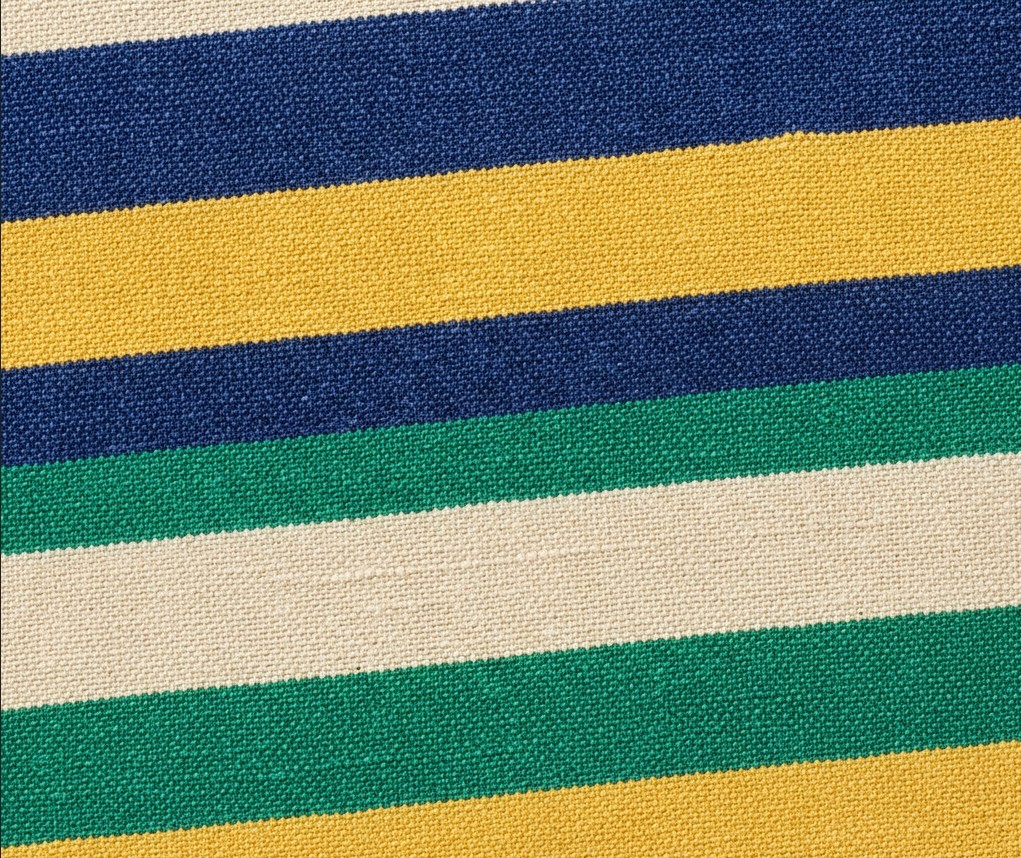

Stripes
group nameWorkwear Fabrics
-
Min Order1 piece
brand nameS-Techo
modelStripes
-
update timeWed, 05 Nov 2025 16:04:13 GMT
Packging & Delivery
Min Order1 piece
Briefing
A stripe is fundamentally a line or band that is a different color, tone, or texture from the area immediately next to it.
When used as a pattern, stripes are a group of such lines arranged in a repeating, parallel layout. They are one of the most classic and versatile patterns in design, textiles, and art.
Parallel: The lines run side-by-side.
Contrasting: They differ visually from the background or the adjacent line.
Orientation: They can run horizontally, vertically, or diagonally.
Stripes have been used for centuries and can convey different meanings based on their width and color, ranging from formal (like pinstripes on a suit) to casual/nautical (like a Breton shirt) to bold and modern.
When used as a pattern, stripes are a group of such lines arranged in a repeating, parallel layout. They are one of the most classic and versatile patterns in design, textiles, and art.
Parallel: The lines run side-by-side.
Contrasting: They differ visually from the background or the adjacent line.
Orientation: They can run horizontally, vertically, or diagonally.
Stripes have been used for centuries and can convey different meanings based on their width and color, ranging from formal (like pinstripes on a suit) to casual/nautical (like a Breton shirt) to bold and modern.
Detailed
A stripe is one of the most fundamental and powerful patterns in design. It is defined as a line or band that contrasts in color, tone, or texture with the adjacent area. The pattern itself is created by a series of these lines arranged parallel to one another, creating a visually rhythmic repeat.
1. 🖼️ Visual and Psychological Impact
Directionality: Stripes manipulate perception.
Vertical Stripes: Tend to guide the eye up and down, creating an illusion of height and slenderness. They are common in formal wear, like suits.
Horizontal Stripes: Tend to draw the eye across, often giving an impression of width or stability. They are historically associated with naval and casual wear (like the Breton shirt).
Diagonal Stripes: Introduce dynamic movement and energy, frequently seen in ties or sportswear.
Contrast and Boldness: The degree of contrast between the stripe color and the background determines its impact. A high-contrast stripe (like black and white) is bold and attention-grabbing, while a low-contrast shadow stripe (alternating shades of the same color) is subtle and sophisticated.
2. 🧵 Creation in Fabric
In textiles, stripes are most commonly created in one of two ways:
Woven Stripes: The pattern is an integral part of the fabric structure. By alternating colored warp yarns (running lengthwise, creating vertical stripes) or weft yarns (running width-wise, creating horizontal stripes), the stripe is literally built into the cloth, making it highly durable.
Printed Stripes: The color is applied to the surface of the finished fabric. This allows for more intricate or random, non-uniform stripe layouts.
3. 🔖 Classic Types of Stripes
Pinstripe : Extremely thin (pin-width) dashed or solid lines, spaced far apart on a solid background. Formal suiting, business attire.
Hairline Stripe : Thinner than pinstripes, resembling a hair's width. Often very close together, giving a textured effect. Shirting, subtle textures
Bengal Stripe : A wide, balanced stripe where the colored stripe and the background stripe are of equal width (typically about 1/4 inch). Dress shirts, interior décor.
Awning Stripe : Very wide, bold stripes of equal width, often in high-contrast colors (e.g., navy and white). Named after its use on store Awnings. : Upholstery, outdoor fabrics, casual wear.
Ticking Stripe : Narrow, evenly spaced stripes often mirroring around a thicker center stripe, traditionally in blue/red and white. Bedding (like mattress ticking), rustic décor.
🧵 Striped Fabric — Classic Patterns, Modern Appeal
Composition: Available in Cotton, Polyester/Cotton blends, or custom fiber combinations.
Weight Range: 120–280 gsm (lightweight shirting to medium-weight uniform or casual wear).
Weaving Type: Plain, Twill, or Satin Weave
Width: 57/58 inch (standard) or customizable
Pattern Style: Vertical / Horizontal / Yarn-dyed / Printed Stripes
Color Options: Customizable — from subtle pinstripes to bold contrast lines
You need a product

You May Like

6YRS Shentou Enterprise Limited Company