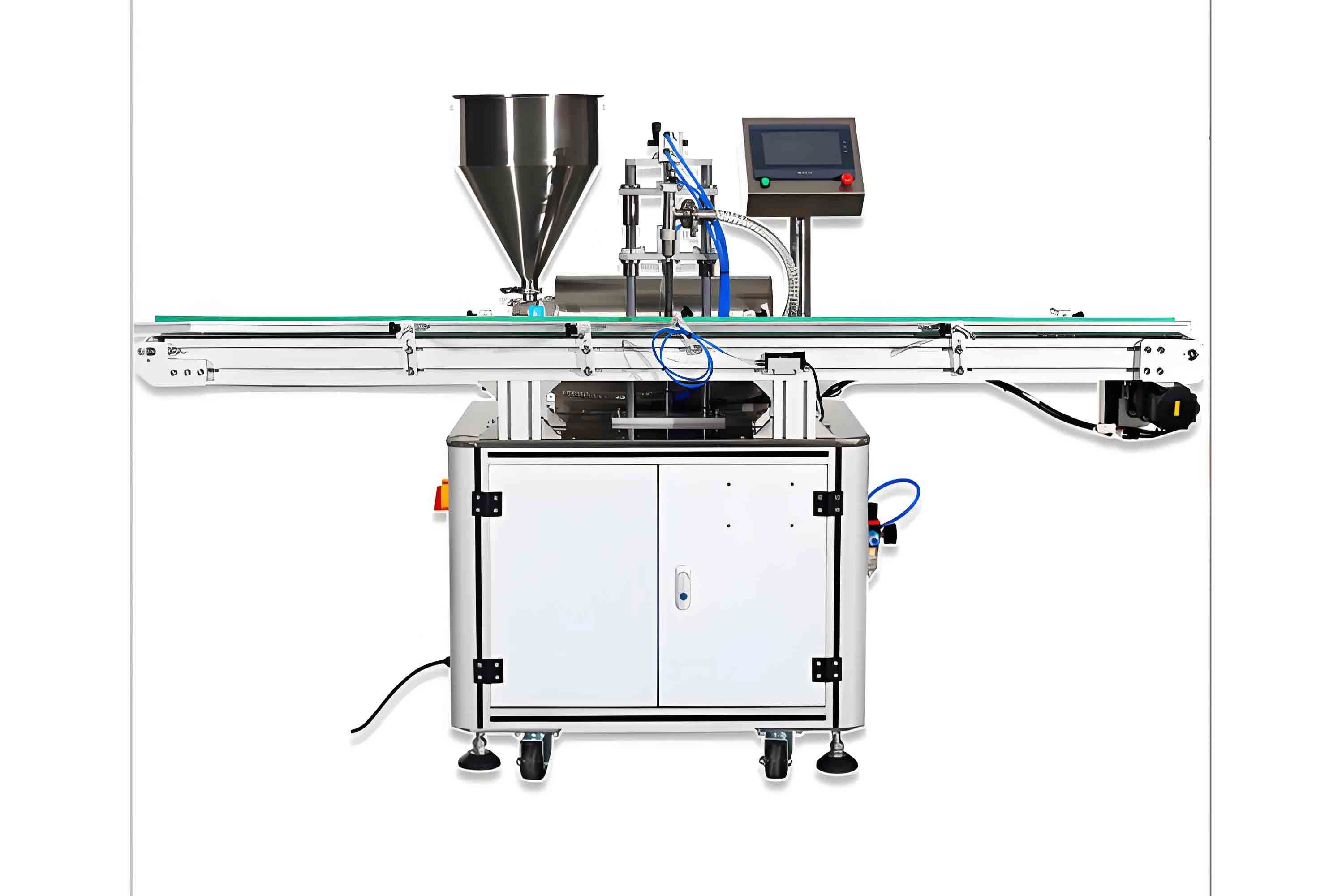


Filling Machine for Bottles Filling Machine Manufacturer
group nameFully-Automatic Packaging Machine
-
Min Order1 piece
brand namefame machinery packaging machines manufacturer
modelFM016
payment methodWestern Union, MoneyGram, T/T, Paypal
-
update timeSat, 29 Aug 2026 03:35:48 GMT
Paramtents
Packaging products plastic bottle glass bottle
bottle specification round
Machine power 1.6Kw
Packaging speed 10-60 pieces/min
Packging & Delivery
Min Order1 piece
Briefing
Filling Machine for bottle Manufacturer can fill different bottles, filling powder, granules,liquid are available
Detailed
Introduction of Filling Machine for Bottles
Linear bottle filling machines are a widely used type of equipment in the liquid filling field. Their core feature is that bottles are arranged in a straight line during the filling process, driven sequentially by a conveyor belt through the filling stations to complete filling, capping/screwing, and other processes.
The following is a detailed analysis of their main characteristics of filling machine for bottles:
I. Main Advantages
* Simple structure, easy to operate and maintain
The mechanical structure is more intuitive and concise than rotary filling machines, with easily accessible parts, making it easy for operators to learn and facilitating daily cleaning, maintenance, and repair.
* Lower cost, high cost-effectiveness
Due to its relatively simple structure, the manufacturing cost is usually lower than that of a rotary filling machine with the same capacity. For small and medium-sized production lines or enterprises with limited investment budgets, it is a highly cost-effective choice.
* High flexibility, strong adaptability
Easy changeover: By adjusting the guardrails on both sides of the conveyor belt, changing the filling head, or adjusting parameters, it can adapt to bottles of different shapes, sizes, and capacities (such as round, square, and irregularly shaped bottles).
Modular Functionality: It can be flexibly connected with upstream bottle washing machines, downstream labeling machines, and carton sealing machines to form an automated production line. The number of filling heads can also be increased or decreased according to production capacity requirements.
Relatively Flexible Footprint:
The equipment has a long, narrow layout with a narrow width, but the length can be extended according to the number of workstations. This is advantageous for production lines with long and narrow factory buildings or those requiring flexible layout.
Suitable for Low to Medium-Speed Production Capacity:
Highly suitable for small to medium batch, multi-variety production scenarios, such as daily chemicals (shampoo, detergent), edible oils, condiments, alcoholic beverages (baijiu, huangjiu), pharmaceuticals (syrups), and specialty beverages.
Reliable Filling Accuracy:
Utilizing mature filling technologies (such as atmospheric pressure, gravity, pressure, or pump filling), combined with high-precision flow meters or electronic weighing feedback systems, high filling accuracy requirements can be achieved.
II. Main Disadvantages and Limitations
Relatively Low Production Speed
This is the most significant difference compared to rotary filling machines. Because the bottles move intermittently or continuously in a linear fashion, the number of bottles handled by the filling head per unit time is limited. Therefore, the peak capacity of a single line is usually lower than that of a high-speed rotary filling machine.
Production efficiency is relatively low.
The linear layout results in a series relationship between workstations (such as filling and capping), with the cycle time limited by the slowest workstation. Rotary machines, on the other hand, have workstations operating in parallel, resulting in higher efficiency.
Larger floor space required.
To achieve multi-station functions (such as multiple filling heads and multiple capping heads), the length of the equipment will continuously increase, requiring more longitudinal space in the factory.
III. Technical Characteristics and Common Filling Methods
Linear filling machines can select different filling principles depending on the product characteristics:
Atmospheric pressure filling: Relying on the liquid's own weight to flow into the bottle, suitable for non-foaming liquids with good flowability (such as mineral water and juice).
Pressure filling: Pressurizing through a storage tank to allow the liquid to flow rapidly into the bottle, suitable for viscous liquids (such as sauces and honey).
Vacuum filling: A vacuum is created inside the bottle, and the pressure difference draws the material in. Suitable for beverages that are easily oxidized or contain vitamins.
Quantitative filling: High-precision quantitative filling is achieved through peristaltic pumps, ceramic pumps, or servo motors. Widely used in the daily chemical, food, and pharmaceutical industries.
IV. Summary of Typical Application Scenarios
Suitable for: Production lines with a wide variety of products, frequent batch changes, low to medium speed production requirements (e.g., tens to hundreds of bottles per minute), limited budgets, and high flexibility.
Unsuitable for: Large-scale single-product production with a rigid demand for ultra-high-speed production (e.g., hundreds of bottles per minute or more for carbonated beverages, beer, and purified water).
You need a product
You May Like
6YRS Guangzhou Fame International Trade Co.,Ltd
- Nearest port for product export
- Guangzhou
- Delivery clauses under the trade mode
- FOB, CFR, CIF, EXW
- Acceptable payment methods
- T/T, MoneyGram, Credit Card, PayPal, Westem Union, Cash