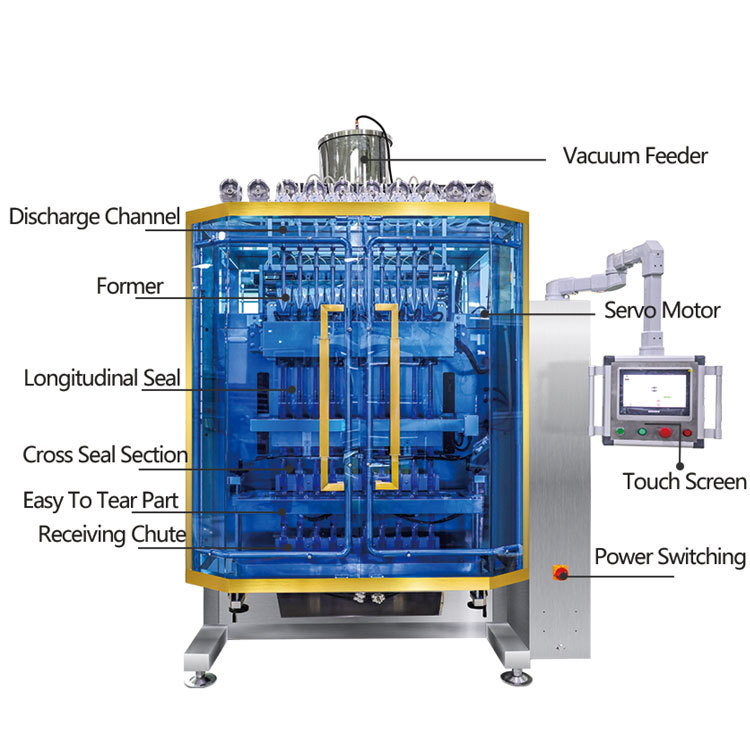


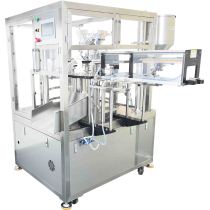
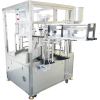
Ten-lane liquid form fill and seal machines manufacturer
group nameLiquid Packaging Machine
-
Min Order1 piece
brand namefame machinery packaging machines manufacturer
modelFM006
payment methodWestern Union, MoneyGram, T/T, Paypal
-
update timeWed, 09 Sep 2026 03:13:20 GMT
Paramtents
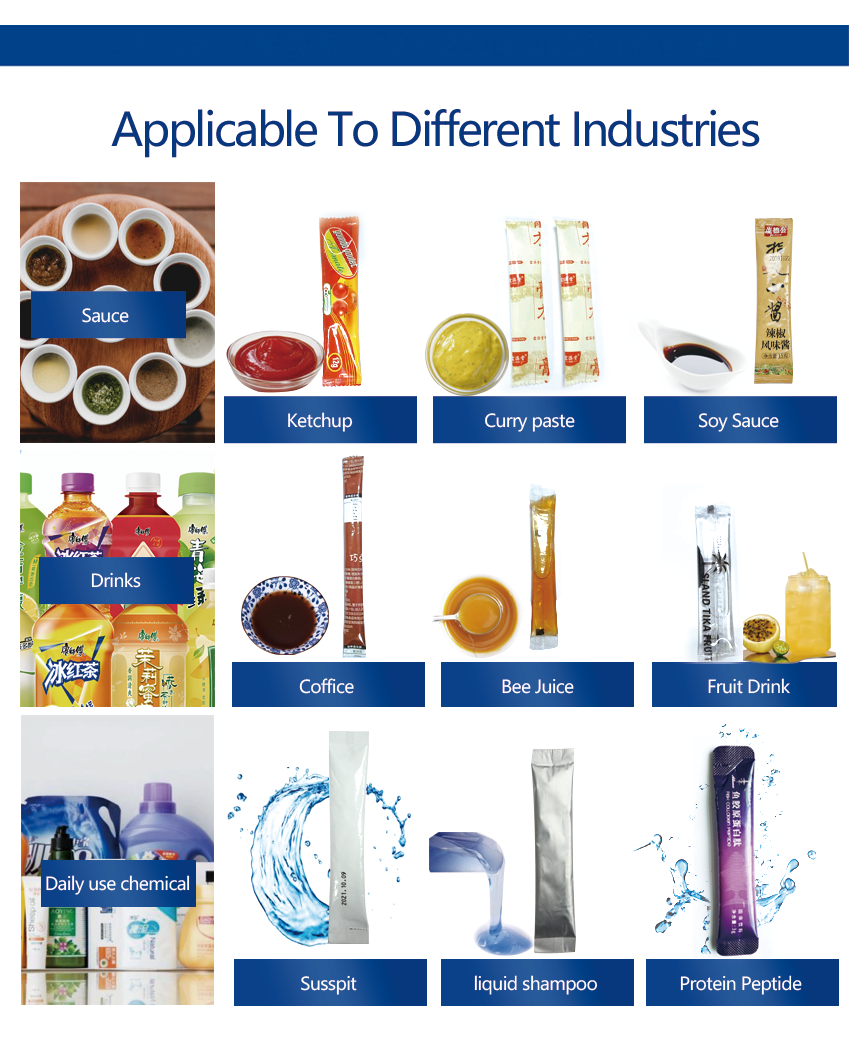
Packaging products Liquid and pastes
Filling specification 30-2000ML
Hopper size 150L(304 stainless steel )
Machine power 8Kw
Packging & Delivery
Min Order1 piece
Briefing
liquid form fill and seal machines manufacturer can suppy different sealing machines and filling machines,liquid packaging solution
Detailed
Introduction of Ten-lane Liquid Form Fill and Seal Machines
main components of ten-lane liquid form fill and seal machines
I. Frame and Transmission System (Foundation and Power)
Main Frame/Chain: The main steel structure of the machine, typically made of stainless steel, supporting all other components and ensuring rigidity and stability.
Main Transmission System:
Main Motor: Typically a servo motor or variable frequency motor, providing core power.
Reducer/Gearbox: Regulates output speed and torque.
Drive Shaft, Chain, Synchronous Belt, Cam Divider: Precisely and synchronously transmits power to each motion unit (e.g., filling, capping, sealing).
II. Container Handling System (Conveying and Positioning)
Bottle/Can Conveyor Belt: Smoothly feeds empty containers (bottles, cans) into the main machine.
Separating Screw (Star Wheel): Separates densely conveyed containers at equal intervals, preparing them for entry into the filling station.
Conveyor Chain/Chain Plate: Equipped with positioning and clamping devices (e.g., neck clamping, body clamping mechanisms), precisely carrying and conveying containers sequentially through each station.
Bottle/Can Lifting Mechanism (for gravity or pressure filling machines): Lifts the container at the filling station, allowing the filling nozzle to insert into or align with the bottle opening.
III. Core Filling System (Performs Key Functions)
Filling Unit (Core of 10 Rows):
Filling Valves: 10 independent precision valves, the core components for performing the filling action. Based on their operating principle, they can be categorized as: gravity filling valves, pressure filling valves, vacuum filling valves, peristaltic pump/metering pump filling valves, etc.
Liquid Cylinder/Reservoir: Stores the liquid to be filled and provides a constant pressure air source for pressure filling.
Liquid Level Control System: Maintains a constant liquid level in the cylinder, ensuring filling accuracy.
Lifting Mechanism: Controls the lifting and lowering of the filling valves to accommodate containers of different heights or to achieve insertion filling.
Metering System:
Quantitative cups, servo motor/stepper motor drive system, flow meters, etc., used to precisely control the filling volume of each bottle.
IV. Sealing System (Completed Packaging)
Cap Supply/Cap Top System:
Cap Sorter: Automatically sorts and orients disordered bottle caps.
Cap Dropper: Transports the sorted caps to the capping station.
Sealing Mechanism:
Capping Heads/Screwing Heads (10 units): Correspond to the filling heads, performing capping (crown cap) or screw cap (thread cap) actions. For carbonated beverages, vacuuming or nitrogen filling functions are often included.
V. Control System (Brain and Nerves)
Main Control System:
PLC (Programmable Logic Controller): The core of the entire machine's logic control.
Human Machine Interface (HMI/Touch Screen): Used for parameter setting, operation control, and status monitoring.
Frequency Inverter, Servo Driver: Drives various motors.
Sensor System:
Photoelectric Sensors/Proximity Switches: Detect container position, presence or absence of caps, liquid level, etc., providing signals to the PLC.
Pneumatic/Hydraulic System:
Air Source Processing Unit (Triple Unit), Solenoid Valves, Cylinders: Provides rapid and stable linear motion power for controlling valves, lifting, and other actions.
VI. Auxiliary and Peripheral Systems
CIP Cleaning System (Important, especially for food and beverage):
Integrated cleaning piping and nozzles allow for automatic on-site cleaning and disinfection of liquid-contacting components such as cylinders and filling valves.
Power and Piping:
Material Piping: Connects external storage tanks to the main unit's cylinders.
Compressed Air Piping: Provides clean compressed air.
Safety Protection Devices:
Safety Cover/Safety Door: Equipped with safety interlock switches to protect operator safety.
Emergency Stop Button
You need a product

You May Like

6YRS Guangzhou Fame International Trade Co.,Ltd
- Nearest port for product export
- Guangzhou
- Delivery clauses under the trade mode
- FOB, CFR, CIF, EXW
- Acceptable payment methods
- T/T, MoneyGram, Credit Card, PayPal, Westem Union, Cash