

GJY Track Geometry System
group nameTrack Geometry System
-
Min Order1 piece
brand nameRailway Maintenance Equipment & Solutions
modelGJY Track Geometry Measurement System
payment methodT/T, L/C, D/P D/A
-
update timeWed, 21 Jan 2026 10:26:40 GMT
Packging & Delivery
Min Order1 piece
Briefing
GJY Track Geometry System
Detailed

Track Geometry System Overview
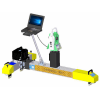
The system utilizes high-precision sensors and a gyro-stabilized inertial measurement system to efficiently measure relative track position parameters, achieving a measurement speed of 4–6 km/h. After data analysis, it can automatically generate reports such as non-compliance reports, curve inspection reports, and track inspection reports. The measurement results can be processed through dedicated adjustment software to simulate and optimize track alignment, providing a construction plan for track optimization to guide on-site fine-adjustment work. Additionally, the system can generate static Track Quality Index (TQI) reports for the section, which can be used for overall track quality evaluation upon project completion and for engineering acceptance.
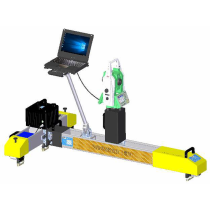
⚪GJY-TW-RB-1 Railway Track Inspection Instrument (Class 0 Relative Measurement)
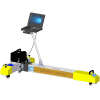
⚪GJY-T-4A Track Inspection Instrument (Class 1 Relative Measurement)
Key Components
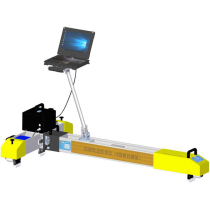
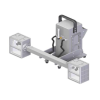
The system is configured around a T-shaped trolley integrated with an inertial measurement system and a sleeper identification and positioning system. This mobile platform is complemented by a ruggedized military-grade laptop computer running integrated data acquisition and analysis software, along with dedicated ballastless track adjustment software for comprehensive track evaluation and optimization.
Application Scopes
⚪ Measuring relative internal geometric parameters of tracks on both high-speed and conventional railway lines
⚪ Primary measurement of track parameters including: gauge, gauge variation rate, superelevation (cant), twist, longitudinal level (profile), alignment, versine, and mileage
⚪ Short-wave precision measurement and fine adjustment of ballastless tracks (Class 0 Relative Measurement)
You need a product


Related Searches
You May Like

- Nearest port for product export
- no
- Delivery clauses under the trade mode
- FOB, CFR, CIF, EXW
- Acceptable payment methods
- T/T, L/C, D/P D/A